

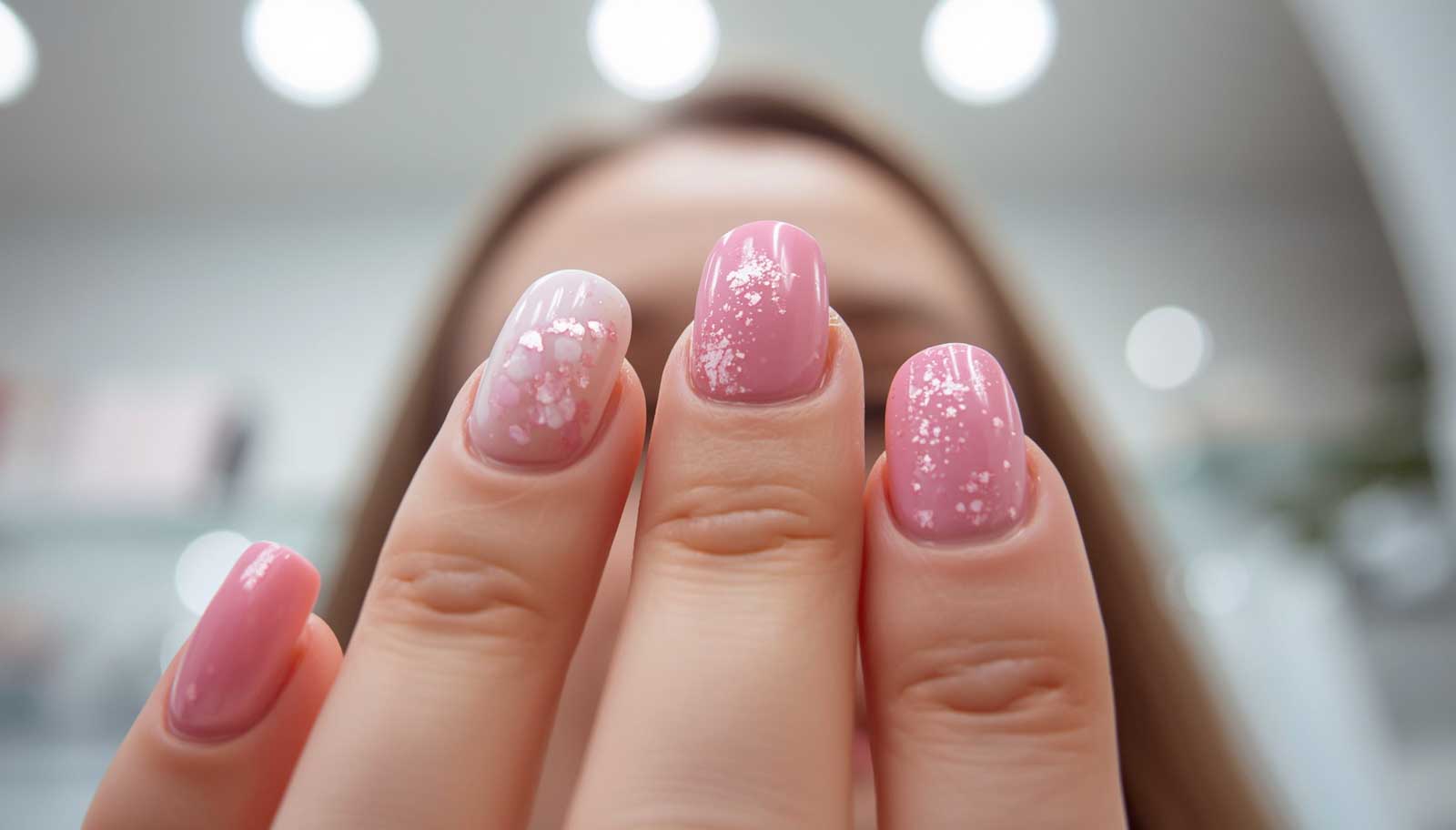
Dip powder manicures have become a favorite for anyone who wants glossy, durable nails without sitting under a UV or LED lamp.
They can last for several weeks, resist everyday chips, and create a strong finish that looks polished from the moment you leave the salon.
But there is another side to dip powder that gets less attention: what happens when it is time to remove it.
Is dip powder actually damaging your nails, or is the removal process the bigger problem?
The answer is a little more complicated than yes or no.
Dip powder itself is not automatically harmful to healthy nails. However, repeated buffing, strong adhesives, prolonged acetone exposure, scraping, peeling, and aggressive removal can leave the natural nail thinner, weaker, dry, or more prone to breakage. The American Academy of Dermatology specifically notes that removing dip manicures with 100% acetone can damage the nails and that the acetone can peel away layers of the nail over time.
Here's what you need to know before your next dip manicure.
What Exactly Is Dip Powder?
Dip powder is a manicure system that combines an adhesive or resin with finely milled acrylic powder.
Instead of curing the product under a UV or LED lamp, the layers are hardened using an activator. The finished coating creates a thick, durable surface over the natural nail.
A typical dip manicure involves preparing and lightly buffing the natural nail, applying a bonding product, adding powder, activating the layers, and then shaping and finishing the nails.
The result can be extremely durable. The American Academy of Dermatology notes that dip powder manicures can remain chip-free for up to four weeks.
That durability is one of the reasons people love them.
It is also one reason removal can be more involved than removing traditional nail polish.
Is Dip Powder Bad for Your Natural Nails?
Not necessarily.
Most of the concern comes from how the manicure is applied, how it is removed, and how frequently you repeat the process.
Dermatologists note that dip powder manicures can be tough on natural nails. The preparation process may involve buffing the nail surface so the product adheres properly, while removal generally requires acetone.
If the nail is repeatedly buffed, soaked, scraped, and covered again without enough time to recover, it can gradually become weaker.
The biggest mistake is assuming that because dip powder does not require a UV lamp, it is automatically harmless.
It isn't.
Every manicure system has its own potential drawbacks.
What Does Dip Powder Removal Really Do to Your Nail?
This is where things get interesting.
The natural nail is made primarily of layers of keratin. When you remove a dip manicure, the goal should be to break down the artificial coating while leaving as much of the natural nail intact as possible.
The problem occurs when removal becomes aggressive.
Acetone Can Dry Out the Nail and Surrounding Skin
Dip powder generally needs strong acetone to break down the product.
According to the AAD, 100% acetone can damage the nails and surrounding skin. More importantly, dermatologist guidance notes that acetone removal can peel away layers of the nail and contribute to thinning over time.
That doesn't mean one acetone removal session will destroy your nails.
The bigger concern is repeated exposure combined with mechanical damage.
Your nails may feel unusually dry, rough, flexible, or fragile immediately after removal.
Scraping Can Remove Part of the Natural Nail
Once the dip powder has softened, it should come away without force.
If a technician has to aggressively scrape, file, or pry the remaining product from your nails, the process can remove some of the natural nail surface along with the product.
This is one reason peeling dip powder off at home is such a bad idea.
If the coating starts lifting, it can be tempting to pull it away like a sticker.
Don't.
Peeling can take layers of your natural nail with it.
Excessive Filing Can Thin the Nail
Filing isn't inherently bad. Proper shaping is a normal part of nail care.
The problem is excessive filing.
If the natural nail is repeatedly buffed before application and then heavily filed during removal, the nail plate can gradually become thinner.
Cleveland Clinic also notes that extensive buffing and filing during artificial nail preparation can weaken the natural nail over time.
What Does a Damaged Nail Look Like After Dip Powder?
Not every change means your nails are seriously damaged.
It is normal for nails to feel slightly dry after acetone exposure.
However, pay attention if you notice:
Excessive peeling
Significant thinning
Increased breakage
Rough or uneven nail surfaces
White patches
Pain or tenderness
Nail lifting
Swelling around the nail
Unusual discoloration
The AAD recommends checking your bare nails after removing dip powder so you can notice changes such as lifting, thickening, discoloration, swelling, or other abnormalities.
If something looks unusual, give your nails a break instead of immediately covering the problem with another manicure.
Why Peeling Dip Powder Off Is So Damaging
This deserves special attention because it is one of the easiest mistakes to make.
You notice a corner lifting.
You pick at it.
A small piece comes off.
So you pull a little more.
Before you know it, the entire manicure has been peeled away.
The problem is that dip powder doesn't always separate cleanly from the natural nail.
When you force the product off, you may remove portions of the superficial nail layers with it.
The result can be nails that feel paper-thin and flexible.
Instead of peeling, soften the product properly and allow it to release gradually.
How to Remove Dip Powder Without Destroying Your Nails
The safest approach is gentle removal rather than speed.
Start by Reducing the Bulk
A professional can carefully file down some of the thickness of the dip powder before soaking.
The goal is to remove the majority of the artificial coating without aggressively filing the natural nail underneath.
If you're doing this yourself, work slowly.
You should never try to file all the way down to the natural nail.
Use Acetone Properly
Once the bulk has been reduced, acetone can help soften the remaining product.
Protecting the surrounding skin is important because acetone can be irritating and drying.
The AAD recommends limiting acetone contact to the nail area rather than unnecessarily soaking the entire hand.
Let the Product Soften
This is where patience matters.
Don't start scraping aggressively just because the dip powder hasn't disappeared immediately.
If the product is still firmly attached, it may need more time to soften.
Trying to force it off can cause more damage than simply waiting.
Gently Remove the Softened Product
Once the dip has softened sufficiently, gently wipe or push away the remaining product.
If it doesn't release easily, stop and soak again rather than digging into the nail.
Your natural nail should never be treated as something that needs to be scraped perfectly clean at any cost.
Can You Remove Dip Powder at Home?
Yes, but you need to be careful.
The biggest risk with DIY removal isn't necessarily the acetone itself. It is the temptation to rush the process.
Many people start scraping when the product is still hard.
Others peel the dip off because it seems faster.
Some aggressively buff the remaining coating until the natural nail becomes extremely thin.
Those shortcuts are exactly what you want to avoid.
If your manicure is particularly thick, difficult to remove, or your natural nails are already weak, professional removal may be the better choice.
How Long Should You Wait Before Getting Dip Powder Again?
There isn't one universal recovery period that applies to everyone.
However, dermatologists recommend giving your nails time between dip manicures, particularly if you notice damage.
The AAD specifically recommends waiting about a month before getting another dip or gel manicure after removal, because repeated acetone exposure can contribute to nail damage.
That doesn't mean you need to avoid all nail color during that period.
Regular nail polish can be an option if your nails are healthy enough for it.
More importantly, use the break to see what your natural nails actually look and feel like.
How to Help Your Nails Recover After Dip Powder
After removal, your priority should be moisture and protection.
Apply cuticle oil or a moisturizing product regularly to the nails and surrounding skin.
Keep your nails at a manageable length if they are weak or peeling.
Avoid using your nails as tools.
Don't pick at peeling layers.
And resist the urge to immediately cover damaged nails with another heavy manicure.
The goal isn't to make your nails "grow stronger" overnight.
It is to protect the existing nail while healthy nail gradually grows out.
Does Dip Powder Damage the Nail Bed or Nail Plate?
This distinction is important.
When people say dip powder "damages the nail bed," they are often referring to damage they can see on the natural nail.
Technically, the nail plate is the hard visible part of the nail, while the nail bed is the skin underneath it.
Many manicure-related problems affect the nail plate rather than directly damaging the nail bed.
However, trauma, lifting, infections, or aggressive manipulation around the nail can affect the surrounding tissues.
That's why unusual changes should not simply be covered with another manicure.
Can Dip Powder Cause Nail Infections?
The manicure process can create hygiene concerns if proper sanitation isn't followed.
One major issue is shared powder containers.
The AAD specifically warns against "double dipping," where multiple clients put their fingers directly into the same powder container. This can potentially spread bacteria and other germs. Salons should instead sprinkle powder from the original container or transfer it into a disposable container for individual use.
Good salon hygiene matters just as much as the removal technique.
What About Allergic Reactions?
Dip powder systems can also cause allergic reactions, particularly because adhesives are used to bond the powder to the nail.
Possible signs include itching, swelling, discoloration, fluid-filled bumps, or lifting around the nail. The AAD recommends testing the product on one nail first if you're concerned about a reaction.
If a reaction develops, don't simply cover it with another manicure.
Remove the product and allow the skin and nail area to recover. Persistent reactions should be evaluated by a dermatologist.
How Often Is Dip Powder Safe?
There isn't a magic number that makes dip powder safe or unsafe.
Your nail health, application technique, removal method, and frequency all matter.
Someone who gets an occasional dip manicure with careful removal may have a very different experience from someone who continuously wears dip powder and aggressively files or peels it off between sets.
If your nails repeatedly become thin, brittle, painful, or discolored after dip manicures, that's a good reason to take a longer break.
Should You Stop Getting Dip Powder?
Not necessarily.
If you enjoy dip powder and your nails remain healthy, you don't automatically need to give it up.
Instead, focus on reducing unnecessary damage.
Choose a reputable salon.
Make sure tools are properly sanitized.
Avoid shared powder containers.
Ask the technician not to aggressively buff your natural nail.
Never let anyone rip or pry off the product.
And don't ignore changes in your natural nails.
The AAD notes that many people can safely wear dip powder nails when appropriate precautions are followed.
When Should You See a Dermatologist?
Don't assume every nail problem is simply "dip powder damage."
See a dermatologist if you notice persistent pain, swelling, nail lifting, significant discoloration, thickening, or changes that don't improve after removing the product.
The same applies if the skin around your nails continues reacting after the manicure has been removed.
Your nails can tell you when something isn't right.
The Bottom Line
So, is dip powder bad for your nails?
Not automatically.
The bigger issue is what happens before, during, and after the manicure.
Repeated buffing can thin the nail. Strong acetone can dry and weaken it. Aggressive scraping can remove natural nail layers. Peeling can take parts of the nail plate with the manicure.
The safest approach is simple: apply gently, remove patiently, and give your natural nails time to recover when they need it.
A long-lasting manicure should never come at the cost of repeatedly damaging the nail underneath.

Comments (0)
No comments yet. Be the first to share your thoughts!
Leave a Comment
You must be logged in to post a comment.